
Does He Like You? Crush Test
Dream Lab EntertainmentTrivia
3.86.00 Reviews
- Version
- 1.0
- Installs
- 50.00K
- Age Rating
- Teen
Screenshots
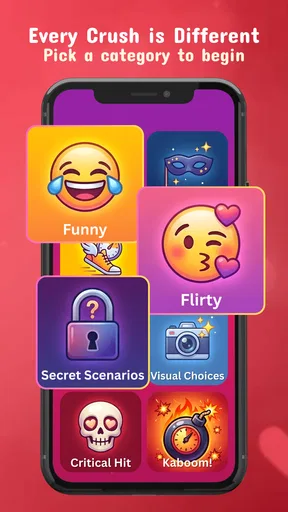
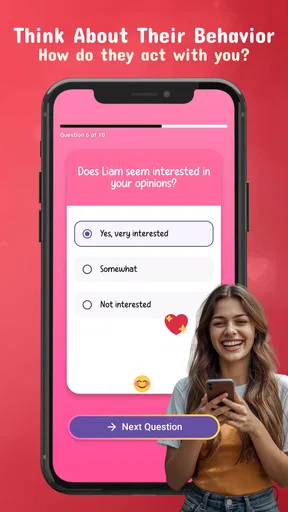
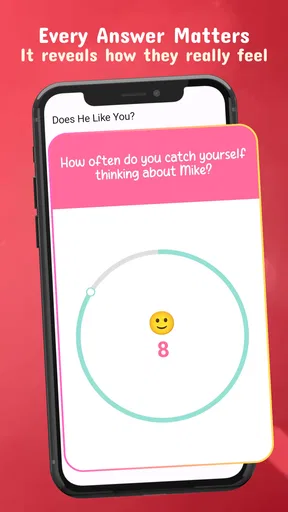
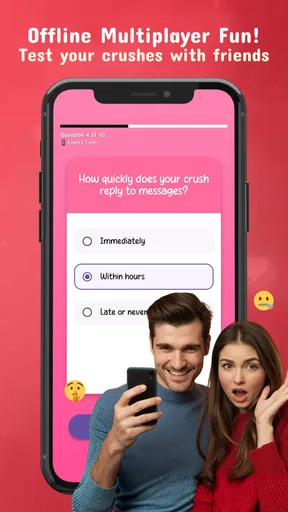
Our Review of Does He Like You? Crush Test
 Analysis by Appyee
If you are wondering whether someone might like you back, Does He Like You? Crush Test offers a quick, lighthearted way to turn that nervous question into a small moment of fun. I approached it as a casual trivia-style game rather than a serious relationship tool, and that distinction matters. It is best enjoyed as an icebreaker, a private curiosity, or something to share with friends—not as proof of another person’s feelings.
Dream Lab Entertainment presents the game around a simple idea: answer or complete a quick crush test and see the result. The experience is deliberately easy to understand, which makes it approachable for someone opening it for the first time. It is free to download, with optional in-app purchases priced at $0.99 per item, and its Teen content rating makes it more suitable for older children, teenagers, and adults than for very young users.
What to expect when you open the crush test
The first thing I noticed is that this is not trying to be a deep dating simulator or a long-form quiz adventure. Its appeal comes from speed. You open it because you have a question in your head, move through the test, and reach a playful result without needing to learn complicated rules.
That makes it a natural fit for a quiet moment before texting a crush, a sleepover conversation, or a group of friends looking for something silly to compare. The result is part of the entertainment, not a scientific reading of body language or a dependable prediction about a relationship. I would keep that expectation in mind from the start, especially if the question feels emotionally important.
The game belongs to the trivia category, but its subject is more personal than a general knowledge quiz. Instead of testing facts about history, films, or geography, it uses the familiar language of crushes and attraction. That narrow theme gives it a clear identity, although it also means the experience may feel repetitive if you are looking for a broad selection of quiz topics.
Its store presence shows a 3.8 average from around 62 ratings and more than 50 thousand installs. Those figures suggest that people are trying it as a casual novelty, while the relatively modest rating is also a useful reminder not to expect the depth of a major, established game. I see it as a small entertainment app with a specific purpose rather than something designed to occupy hours every day.
Because the current version is 1.0, I would treat the experience as an early release. That does not automatically make it poor, but it helps explain why a user should focus on whether the central test is enjoyable instead of expecting a large collection of polished systems. The minimum operating system is Android 7.0, so many older Android phones should be able to run it, provided the device still handles current app installation requirements.
Starting without overthinking the result
For a first-time user, the most useful mindset is to decide what kind of experience you want before beginning. If you want a playful prompt for conversation, the test can work nicely. If you want certainty about whether a classmate, colleague, or friend is interested in you, no quick app can replace an honest conversation and attention to how that person actually behaves.
I also recommend choosing a private moment for the first run. Even when a game is harmless, crush-related questions can feel personal, and you may not want someone nearby commenting on every answer. Once you understand the flow, it can become more entertaining to repeat the experience with friends, but the first attempt is easier when you are not performing for an audience.
One practical tip is to avoid treating every answer as a hidden confession. A result can be funny, encouraging, or unexpectedly disappointing, yet it still comes from a game format. The healthiest way to use it is as a conversation starter: if the result makes you laugh, use that mood to think about what you genuinely know about the situation rather than letting the screen make the decision for you.
Getting through the first setup and test
I’d treat the first session as a quick orientation, not a hunt for a definitive answer: notice how the prompts work, answer with one real situation in mind, and let the result be a playful starting point. Keeping the test private at first can also make it easier to respond honestly without friends steering your choices. Once that feels comfortable, the next step is deciding what the result can—and cannot—tell you.
Keep the first session simple
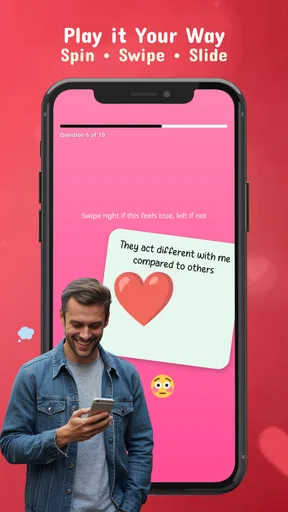
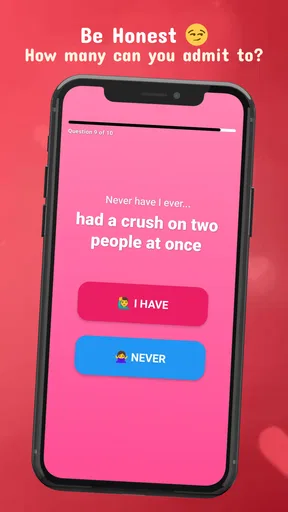
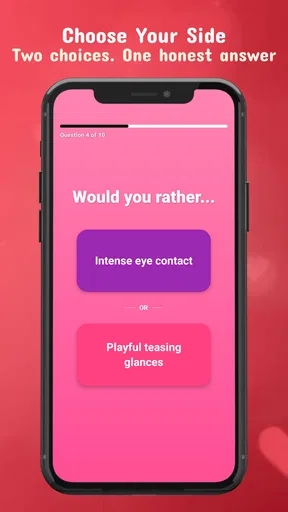
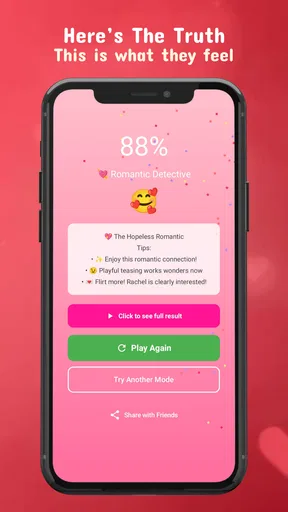
After installing the game, I would begin with the shortest path to the main test instead of searching for extra meaning in every screen. The central experience is supposed to be quick, so the first session should be about learning how the questions or prompts are presented and how the final result is shown.
If the app presents a question that feels personal, answer according to the situation you actually have in mind. Random answers may still produce a result, but they remove the small amount of personal reflection that gives this type of game its charm. At the same time, do not feel pressured to reveal private details just because the theme is romantic. You can keep the experience general and still enjoy it.
The Teen rating is another reason I would use a little judgement when handing the phone to a younger child. The theme is built around crushes, so it is not the same as giving a child a neutral puzzle or arithmetic game. For teenagers and adults, the subject should feel familiar and accessible; for families, it makes sense to decide whether the tone fits the person using the device.
There is no reason to rush through the initial setup. Read each prompt, make sure you understand what it is asking, and then continue. In a quick-result game, the most common mistake is not technical—it is tapping through so quickly that the player forgets what they were answering. Slowing down for a few seconds makes the result feel more connected to the playful question you started with.
How to reach a meaningful first result
Your first successful action is simply completing a test and interpreting the result as entertainment. That sounds obvious, but it is the point where expectations can either make the game enjoyable or undermine it. I found the experience easier to appreciate when I viewed the result as a prompt for self-reflection: Do I actually have signs that this person enjoys talking with me? Have I been too shy to start a normal conversation? Am I hoping for an answer the game cannot provide?
That approach turns a very short activity into something more useful without pretending it is more accurate than it is. If the result is positive, it can encourage you to be a little more open, perhaps by saying hello or suggesting a simple activity. If the result is negative or unclear, it does not need to become a verdict. Real relationships are not decided by a single quiz outcome.
A good everyday scenario would be using the game with a friend before a social event. You might both run the test, compare the playful outcomes, and then talk about what you really want to say to the people you like. The useful part is not the number or label on the screen; it is the way the activity lowers the pressure around a difficult subject.
Another sensible use is as a private journaling prompt. Complete the test, note how you felt about the outcome, and ask yourself whether your reaction says more about your hopes than about the other person. That small distinction is a surprisingly valuable safeguard. It lets the game remain fun while preventing it from replacing direct communication.
Confusion that can make the result feel more important than it is
The biggest possible misunderstanding is assuming that a “detector” can actually detect another person’s thoughts. It cannot turn uncertainty into evidence. A result should not be used to confront someone, pressure them into an answer, or justify sharing their private information. If the situation involves a real emotional risk, a respectful conversation is the better next step.
Another point to watch is repetition. Running the same style of test again and again in search of a preferred result can make the experience less enjoyable and less honest. If you keep retrying until the screen gives you something encouraging, you are no longer using the game as a playful test; you are using it to confirm what you already want to believe. I would complete it once, enjoy the moment, and then return to real-world clues.
Optional purchases are also worth understanding before you tap through any payment screen. The game is free, but in-app items cost $0.99 each. I would not buy anything merely because a result feels unsatisfying or because I expect a paid item to reveal a guaranteed truth. Treat any purchase as optional entertainment, and make sure the person using the device has permission to spend money through the relevant app store account.
Some players may also wonder whether this is suitable for a group. It can be, but only if everyone is comfortable. A friend may enjoy sharing a silly result while another person may prefer to keep crush-related questions private. The best group use is voluntary and playful, with no pressure to name the person involved or explain personal answers.
Where it fits among other trivia and relationship games
Compared with a standard trivia app, this game has a much narrower focus. You will not choose it to build general knowledge or challenge yourself with factual questions. Its advantage is immediacy: the topic is recognizable, the purpose is clear, and the emotional hook can make a short session more memorable than a random quiz.
Compared with a personality test, it also feels lighter. Personality tests often invite long explanations about habits, preferences, or character traits. A crush test is more situational and more playful. That makes it easier to share, but it also gives you less material to think about afterward. If you want detailed self-understanding, a thoughtful journal exercise or a well-designed psychology resource would be a better choice.
Compared with dating apps, the difference is even clearer. Dating services are built around meeting people, viewing profiles, and communicating with potential matches. This game does not replace those activities. It is useful before the conversation, when you want to laugh about your nerves, but it cannot help you verify compatibility or build trust with someone.
That trade-off is the central strength and weakness. The short format removes friction, which is why a first-time user can understand it quickly. The same simplicity limits replay value for anyone who wants a complex progression system, varied challenges, or a detailed explanation behind every result. I would recommend it to someone seeking a quick themed diversion, not to a player shopping for a long-term trivia game.
Dream Lab Entertainment has chosen a concept that is easy to recognize, and that makes the game approachable. Still, the modest average rating tells me that expectations should remain realistic. Some users will enjoy the novelty, while others may find the experience too basic or too dependent on the joke of the result. Your reaction will probably depend on whether you enjoy playful relationship quizzes in the first place.
Who should try it and who should skip it
I think it is a good match for teenagers and adults who enjoy casual quizzes, want a quick conversation starter, or like sharing humorous results with friends. It may also suit someone who feels shy about discussing a crush and wants a low-pressure way to begin thinking about the situation.
I would skip it if you are looking for reliable relationship advice, evidence-based emotional guidance, or a game with substantial depth. It is also not the right choice for someone who tends to take random results personally. In that case, a neutral puzzle or a conventional trivia game would offer entertainment without attaching the outcome to an emotionally sensitive question.
Parents and guardians may want to consider the Teen rating before allowing younger users to play. The subject is not inherently serious, but crushes can be personal, and children may interpret playful results more literally than older users. A short conversation about the difference between a game and real evidence can make the experience safer and more sensible.
My next-step recommendation after the first result
Once you have completed the test, I would resist the temptation to keep searching for a perfect answer inside the app. Instead, use the result to choose a small, respectful real-world action. Send a normal message, ask about a shared interest, or suggest a simple conversation. The goal is not to force a confession; it is to replace guessing with a little more genuine interaction.
If you are using it with friends, compare reactions rather than treating the results as competition. Ask what each person actually hopes will happen and whether there are real signs of mutual interest. This turns the game into a social prompt and avoids the awkwardness that comes from announcing someone else’s feelings without their consent.
I would also keep purchases separate from emotional decisions. The free version is enough to judge whether the basic idea appeals to you. If you enjoy the format and choose to spend on a $0.99 item, do it because you want an extra piece of casual entertainment—not because you believe payment will make the result more truthful.
With its May 13, 2025 release and version 1.0 status, this is a young, focused game rather than a fully developed relationship companion. Its strongest quality is how quickly it gets a curious player into the crush-test idea. Its main limitation is that the same quickness leaves little room for depth, certainty, or lasting progression.
My final view is straightforward: Does He Like You? Crush Test is worth trying if you understand that the fun is in the question, the reaction, and the conversation afterward. It is free to start, easy to approach, and specific enough to make a short break entertaining. Just keep the result in its proper place. Use the game to open a conversation, not to decide what another person feels.
Verdict
Strengths of Does He Like You? Crush Test
- Quick, entertaining way to pass time with friends.
- Simple interface that is easy for most users to understand.
- Provides playful results suited to casual relationship conversations.
- Works well as a lighthearted party or sleepover activity.
- May help start conversations about feelings and dating preferences.
Limitations of Does He Like You? Crush Test
- Results are for entertainment and cannot reveal genuine feelings.
- Repeated tests may produce predictable or repetitive outcomes.
- Some features or results may require watching advertisements.
- Questions may feel too general for complex relationships.
- Privacy details should be checked before entering personal information.
Similar Picks in This Category
View All
Millionaire 2026 Quiz & Trivia
Quiz & Trivia Games by Submarine Apps4.5

Brain Test 2: Tricky Stories
Unico Studio4.7

Trivia Crack: Brain Quiz Games
etermax4.4

QuizzLand. Quiz & Trivia game
Quiz & Trivia Games by Mno Go Apps4.8

Brain Test: Tricky Puzzles
Unico Studio4.7

Logo Quiz
bubble quiz games4.5
Frequently Asked Questions
What is Does He Like You? Crush Test?
Does He Like You? Crush Test is a casual entertainment app designed to help users explore whether their crush may have romantic interest in them. It typically uses playful questions, compatibility-style prompts, and a test result to create a fun experience. The app should be treated as a lighthearted tool rather than a scientifically accurate way to determine someone’s feelings or intentions.
Is the Does He Like You? Crush Test result accurate?
The result should not be considered scientifically accurate or capable of reading another person’s emotions. The test is mainly intended for amusement and may generate results based on your answers, predefined patterns, or random elements. Real feelings are better understood through honest communication, consistent behavior, and mutual respect, so avoid making important relationship decisions based only on the app’s final score.
Is Does He Like You? Crush Test free to download and use?
The app may be available as a free download, but some features can depend on the version, platform, or developer’s monetization model. Users may encounter advertisements, optional purchases, premium content, or limits on certain tests. Before downloading, check the official Google Play Store or Apple App Store listing for current pricing, subscriptions, in-app purchase details, and any trial conditions.
Does the app require personal information or access to my contacts?
A crush-test app may ask you to enter answers or basic information to personalize the experience, but it should not need sensitive data to provide an entertainment result. Review the requested permissions carefully before accepting them, especially access to contacts, photos, location, microphone, or social accounts. Also read the privacy policy to understand whether entered information is stored, shared, or used for advertising.
Is Does He Like You? Crush Test suitable for children and teenagers?
The app may be appealing to younger users because of its simple romantic quizzes, but suitability depends on the content, advertisements, privacy practices, and age rating shown in the official store. Parents should review the listing and test the app before allowing a child to use it. Younger users should also be reminded not to enter private information or treat the results as relationship advice.
Play our best games!


